Episode 10: The Current Crew

Daniel Ratke
Research & Engineering
Term map
Backtesting vocabulary for this article
Treat signal timestamp, point-in-time universe, quote-aware fill, reject reason, replay artifact, walk-forward test, and cache key as first-class terms. They separate reproducible research from a backtest that only preserves the final performance table.
Follow the linked definitions for Point-in-time contracts, Quote-aware fills, Reject reasons, Replay artifact, Cache key, Signal timestamp, Look-ahead leakage, Walk-forward test, Slippage model, Same-bar fill, Promotion gate, and Options data API.
Read this article with Options Backtesting API, Backtesting Framework, Backtesting Data Quality Checklist, Backtesting Execution Realism, Quote-Aware Options Backtests, and Backtest to Paper Trading Parity Checklist.
Scope
This episode summarizes the current state of the portfolio journey using:
PAPER_BOTS.mdroadmap.jsonbaseline_summary.jsonRUNS.md
It is the state-of-the-journey episode, not a victory lap.
Result Snapshot
Current practical picture:
| Sleeve | Current status | Why it matters |
|---|---|---|
c66 | lead_paper_bot | strongest current deployable evidence |
c36 | backup_candidate / open_paper_only | profitable but sparse backup |
c4 | roadmap says next_candidate, recent runs say park_c4 | useful branch, currently not admission-ready |
QQQ dispersion | research_only | strongest research-only sleeve, sample still thin |
| Broad ORB | no longer the main expansion path | important negative result from the last two months |
That is not a finished portfolio. But it is a much clearer map than the repo had two months earlier.
Crew Map
c66 is the anchor candidate because its logic is narrow and its evidence is the least fragile. It is a short-only opening-compression expansion model, expressed through slower 2-5 DTE options under calmer-day filters. In portfolio terms, it currently occupies the role of "first strategy that has earned operational respect."
c36 remains valuable because it represents a different market hypothesis. Instead of trading expansion out of a coil, it fades short-horizon VWAP residual extremes and tries to monetize the snapback through quote-aware single-leg options. Its bottleneck is not that the logic is incoherent. Its bottleneck is that the high-quality version remains too sparse, while the denser opportunity-biased version decays.
c4 is the repository's most instructive relative-value near-miss. It asks whether a breakout is more credible when the primary ticker is outperforming a beta-adjusted proxy rather than simply moving in isolation. That is a sophisticated and scientifically interesting framing. The reason it is currently parked is not conceptual weakness alone. It is that, after bug repair and density repair, the branch still did not clear the portfolio's overlap, feasibility, and parity standards.
The QQQ-only dispersion sleeve remains the most interesting research-only branch because it concentrates the strongest part of the c4-style logic into the symbol that actually carried the edge. It also demonstrates the value of dynamic overlay generation and data-path repair. At the same time, its thin sample is exactly why the repo has not promoted it. That tension is part of the public story, not an inconvenience to hide.
What We Know Now
The strongest conclusions from the repo are these:
- A believable simulator matters more than a flattering one.
- Broad ORB search under realistic constraints mostly did not survive.
c66is the first model with anchor-like qualities.c36andc4show two different kinds of near-miss.QQQ-only dispersion is the most interesting unpromoted sleeve.- Negative results are saving more time than vague optimism would.
That is already a meaningful body of knowledge.
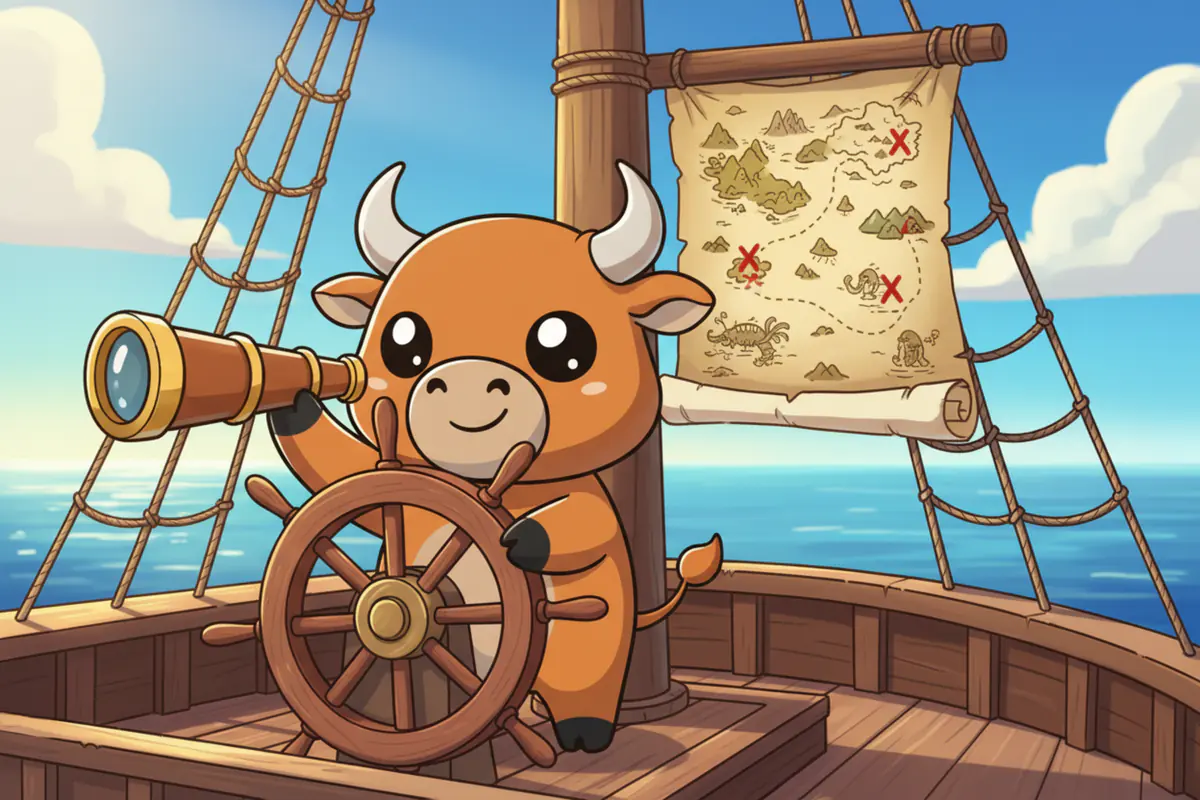
What The One Piece Analogy Actually Means Here
The wrong version of the analogy would be "we are about to discover the one perfect model."
The better version is:
- the One Piece is a working portfolio of models with believable Sharpe
- the crew matters more than a solo hero
- bad islands must be left behind quickly
- the map gets better every time a false lead is crossed off
In this repo, the treasure is not a single backtest screenshot. It is a small basket of low-overlap models that still makes sense after realism fixes, parity checks, and stress scenarios.
What Happens Next
If the repo stays disciplined, the next phase should not be "add thirty new ideas."
It should be:
- continue operating
c66under strict paper parity - decide whether
c36can gain density without losing quality - leave
c4parked unless new evidence truly reopens it - keep the
QQQdispersion sleeve in research until sample improves materially - evaluate everything in portfolio context, beyond standalone anecdotes
That is how the public story stays credible.
What We Will Publish
A build-in-public series based on this repo should repeatedly publish:
- exact result tables
- explicit gate failures
- what changed in the pipeline
- what was closed permanently
- what remains promising but unpromoted
The audience does not need us to act certain. It needs us to be legible.
Final Take
This repo has not found the One Piece of Sharpe yet.
What it has found is better than that kind of fantasy:
- a measurement system that is more honest than it was two months ago
- a smaller and more credible set of survivors
- a growing discipline around saying no
- the first outline of an actual portfolio
That is enough to keep building publicly with seriousness.
The journey is now specific. The next milestones are not abstract. The crew list is short. The standards are clearer. That is real progress.
That is also why the public series should remain scientific in tone. The real accomplishment of the last two months is not that the repo found certainty. It is that it reduced ambiguity. Some branches now have stronger causal stories and better evidence. Some branches have been killed with much more confidence than before. A few remain unresolved but legible. That is exactly the kind of state from which a real portfolio can eventually be built.
Related workflow
For the Episode 10: The Current Crew workflow, continue through Options Backtesting API, Backtesting Framework, Backtesting Execution Realism, Backtesting Data Quality Checklist, Quote-Aware Options Backtests, and Backtest to Paper Trading Parity Checklist.
How the terminology applies
For Episode 10: The Current Crew, the backtesting workflow should treat Point-in-time contracts, Quote-aware fills, Reject reasons, Replay artifact, Cache key, and Signal timestamp as operational state rather than glossary decoration. That framing keeps the research claim causal: the strategy can only select instruments, prices, and labels that existed at the decision time.
A developer implementing this research idea should persist Look-ahead leakage, Walk-forward test, Slippage model, Same-bar fill, Promotion gate, and Options data API beside the result, instead of leaving those words in a term card. It also turns attractive performance into an auditable record where fills, skips, thresholds, and replay inputs can be challenged independently.
The review artifact for Episode 10: The Current Crew becomes more useful when OPRA-originating data, OCC option symbol, Bid/ask spread, Midpoint, Quote/trade condition, and Quote vs trade semantics appear in the same body of evidence as the selected rows. When a result is promoted, these fields should appear in the run manifest, rather than a prose summary or final equity curve.
In production notes for this backtesting workflow, REST snapshot, WebSocket stream, Entitlement gate, Quote freshness, Timestamp semantics, and Pagination cursor define the checks that decide whether the workflow is reproducible. The result is a backtest that can be rerun, compared across threshold families, and rejected when the evidence is not strong enough.
For Episode 10: The Current Crew, the practical acceptance test is simple: another developer should be able to read the body, identify the exact inputs, reproduce the request sequence, and explain the accepted and rejected rows without relying on the bottom terminology grid. If a phrase appears in the page vocabulary, it should correspond to a stored field, a validation check, a replay step, or an implementation decision in the backtesting workflow.
This is also the reason the article should not measure success only by the final chart, table, or headline metric. The better standard is whether the data path, timing model, entitlement state, and evidence trail survive review. When those pieces are written directly into the body, the terminology becomes part of the workflow readers can implement.
Terminology
Market-data terms used in this article
These terms keep the article connected to the CuteMarkets knowledge base and to the exact API workflow behind the research.
Point-in-time contracts
Contract discovery anchored to the research date so a backtest does not use future listings.
Quote-aware fills
Entry and exit assumptions based on bid/ask quotes, quote age, spread width, and side-specific fill rules.
Reject reasons
Logged explanations for skipped contracts or fills, including stale quote, wide spread, no bid, or missing data.
Replay artifact
The saved request, selection, fill, reject, and metric record that lets another developer audit the backtest.
Cache key
The structured identifier that keeps provider, endpoint, ticker, timestamp, plan, and schema state from being mixed.
Signal timestamp
The exact time a strategy made a decision, used to reconstruct the visible universe and quote window causally.
Look-ahead leakage
A research error where a fill, contract, indicator, or label uses information unavailable at decision time.
Walk-forward test
A validation method that repeatedly trains and evaluates across separated time windows instead of trusting one optimized sample.
Slippage model
A fill-cost assumption based on bid/ask side, midpoint, spread percent, quote age, and liquidity policy.
Same-bar fill
An intraday backtest assumption that can become invalid when signal, entry, stop, and target ordering is ambiguous.
Promotion gate
The written threshold that decides whether a research candidate can move into paper trading or production monitoring.
Options data API
The product surface for chains, contracts, quotes, trades, aggregates, Greeks, IV, open interest, and expirations.
OPRA-originating data
The U.S. listed-options source context behind quotes, trades, exchange participation, and consolidated option-market records.
OCC option symbol
The exact option contract identifier that preserves root, expiration, call or put side, and strike.
Bid/ask spread
The execution interval between bid and ask that determines whether a contract is realistically tradable.
Midpoint
The computed center between bid and ask, useful as a reference price but not proof that an order would fill.
Quote/trade condition
The condition-code, exchange, correction, sequence, and timestamp context that explains how a quote or trade row can be used.
Quote vs trade semantics
The distinction between executable bid/ask markets, printed transactions, and bar-level summaries.
REST snapshot
A reproducible request for current or historical market state, used for initialization, backfills, and audit logs.
WebSocket stream
A persistent live connection that needs subscription topics, reconnect tracking, freshness labels, and REST repair paths.
Entitlement gate
The product, plan, quote, live, delayed, historical, or commercial-use boundary checked before data is shown.
Quote freshness
The age, timestamp, and live or delayed state of a bid/ask record before it is used in a scanner, backtest, or UI.
Timestamp semantics
The exchange, provider, ingestion, session, and application time context attached to a market-data record.
Pagination cursor
The continuation token or next URL that keeps large chains, trades, quotes, and historical windows complete.
Written by
Daniel Ratke
Research & Engineering
Daniel covers the deeper research notes: options backtesting, execution realism, robustness testing, data engineering, and strategy validation.
Product links
Build the workflow with CuteMarkets
This article is part of the broader CuteMarkets product and research stack. Use the landing pages below to move from the blog into the specific API workflow you want to evaluate.
Beginner options path
Send newcomers to the beginner path for calls, puts, chains, Greeks, IV, and risk.
Options Data API
See the main options overview for real-time and historical options data.
Historical Options Data API
Inspect the historical contracts, quotes, trades, and aggregates workflow.
Options Chain API
Go straight to chain snapshots, expirations, and strike discovery.
Pricing
Review plans before you move from free evaluation into production usage.